
Back to Basics Reset: Setting Your Organization Up for Success in the Year Ahead
Part 3: Making the Work Sustainable
By Chris Kennedy (he/him), Business Development Specialist, Endura Consulting
A Quick Recap
In Part 1 of this series, I explored why taking a Back to Basics Reset can be such a powerful step for organizations at the start of a new year. It’s easy to jump straight into planning and new initiatives, but revisiting the forms, workflows, and everyday practices that shape how we work can make everything that follows more sustainable and aligned.
In Part 2, we moved from why this work matters to where to begin. I shared a few practical starting points, including reviewing forms and templates, revisiting internal workflows, and auditing language and tone, all through a DEIBCA lens so that the systems supporting our work reflect the values we say we stand for.
In this final instalment, we turn to the question many teams ask next: How do we actually implement these changes and make them stick without overwhelming the people doing the work?
Implementing and Maintaining
Implementing and maintaining these kinds of changes doesn’t have to be an overwhelming process. In fact, it works best when teams treat it less like a one-time project and more like a rhythm they return to regularly.
A good place to begin is simply by choosing a short list. Pick three to five forms, workflows, or internal processes that feel like the right place to start. You don’t need to fix everything at once. Focusing on a few areas first helps build momentum and shows the team that meaningful change can happen without turning everything upside down.
From there, it can be helpful to bring together a small, cross-functional group of people to look at those systems together. When you include folks from different roles or departments, you start to see how processes actually function in practice, not just how they were originally designed. As you work through updates, set some clear goals and timelines so everyone knows what success looks like for that first round.
One small step that makes a big difference is documenting the “why” behind the changes you make. That context becomes incredibly useful later when new staff join, when processes evolve again, or when someone asks why things are done a certain way. And as updates take shape, communicate early and often. Let people know what’s changing, what to expect, and how it supports the way your organization wants to work.
Finally, consider making this part of your organization’s annual rhythm. Some teams even schedule a dedicated “Process Review Week” each January or February. It’s a simple way to pause, reflect, and make sure the systems supporting your work still reflect the values and culture you’re trying to build.
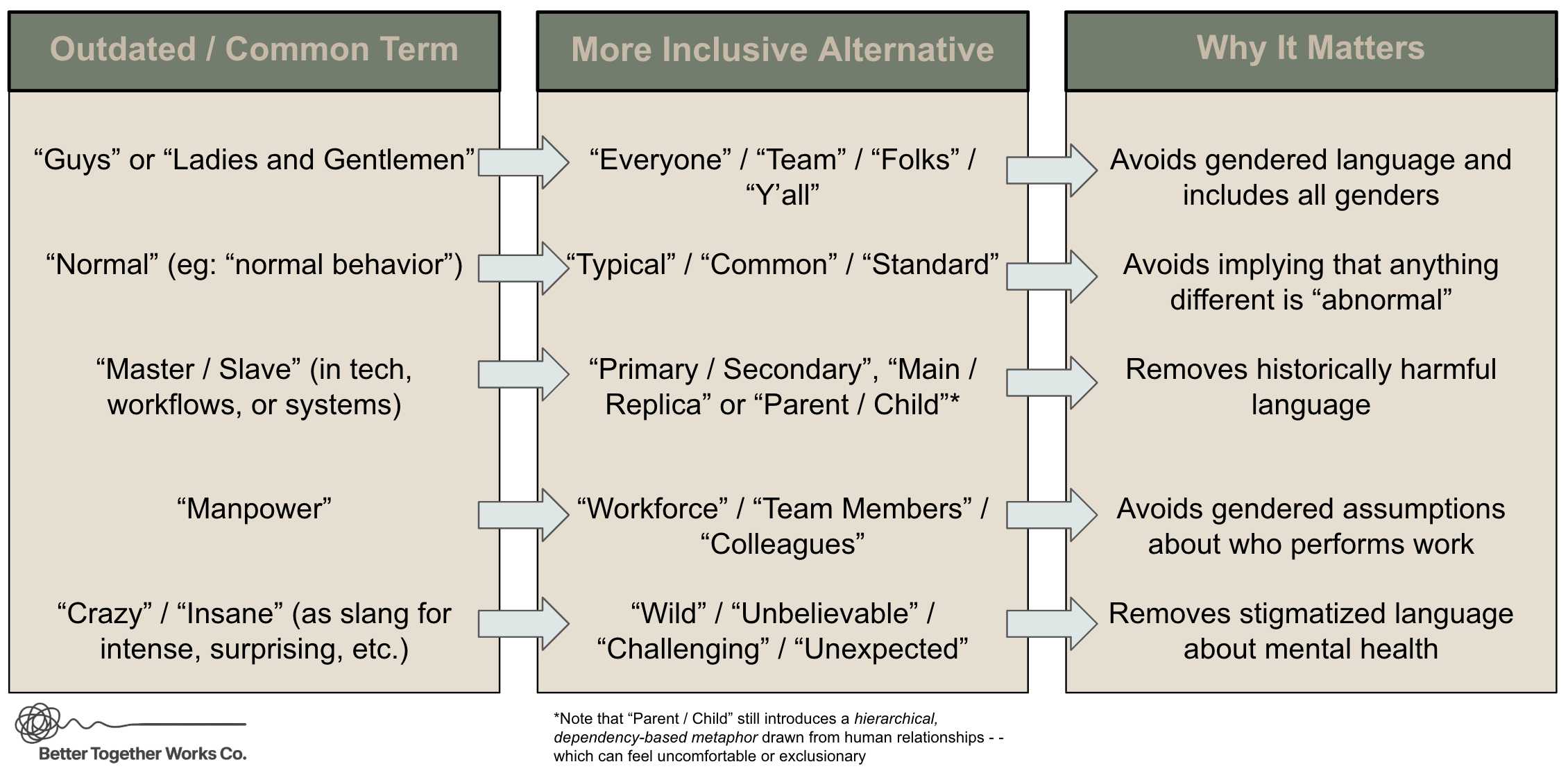
Infographic from Better Together Works Co. showing examples of outdated workplace language alongside more inclusive alternatives and explanations of why inclusive wording matters.
Managing Change Without the Burnout
A reset can stir up resistance - - especially when people have grown attached to “how things have always been.” The key is to frame it as an opportunity, not a correction.
Remind your team: this isn’t about perfection; it’s about alignment. The goal isn’t to fix people - - it’s to strengthen systems so they serve people better.
Involve voices at every level, celebrate quick wins, and show the impact early. When someone says, “That new intake form makes it so much easier for people to participate,” amplify it. Let those small improvements tell your success story.
The Payoff
A “Back to Basics Reset” doesn’t just clean up your internal clutter - - it builds confidence, consistency, and trust. It helps your team move faster because everyone’s on the same page. It also ensures that every message, form, and process reflects the inclusive, collaborative culture you’re striving to create.
Starting the year this way isn’t just smart operations. It’s a quiet but powerful act of leadership - - one that says, “We care enough to do things right.”
Ready to start your own reset?
Pick one system, one process, or one form, and ask yourself: Does this reflect who we are now?
If the answer’s “not yet,” that’s your place to begin.
